


Choosing where to complete IRATA training in Europe should not depend on the course price alone.
For students travelling from another country, the real cost also includes flights, accommodation, airport transfers and something that is often overlooked: the daily journey between the accommodation and the training centre.
There are also differences in how courses are scheduled. Although all candidates must pass an independent assessment under the IRATA system, some centres concentrate the practical training into four days before assessment, while others provide five full training days plus a separate assessment day.
So, if you are trying to decide where to take IRATA Level 1 in Europe, it makes sense to compare the complete trip rather than only the advertised training fee.
This guide looks at several European IRATA training options that are particularly relevant to international students and compares course cost, real training time, airport access, location, accommodation and what the destination offers outside training hours.
- course price
- actual training days
- nearest international airport
- ease of reaching the training venue
- urban, peripheral or industrial-estate location
- accommodation
- estimated overall stay cost
- training language
- facilities
- food and dining options
- beaches and leisure
- climbing and activities after training
| IRATA training in Europe: quick facts Prices found in this comparison: from roughly €870 to well above €1,500, depending on country and tax treatment. Typical calendar: 5-6 days including assessment. TTR Barcelona: 5 full training days + independent assessment day. TTR student accommodation: €150 per week, subject to availability. Airport: Barcelona-El Prat (BCN), connected to Europa | Fira by L9 Sud metro. Languages at TTR: English and Spanish. |
Data and prices reviewed in August 2026. Training fees, tax treatment, transport schedules and availability can change. Always confirm the latest information directly with the training provider before booking flights or accommodation.
How we compared IRATA training centres
This comparison uses publicly available information from IRATA International, official training-centre websites and official transport operators where possible. The aim is not to create an official ranking – IRATA does not publish a “best training centre” ranking – but to help an international student compare the practical reality of travelling for training.
We have focused on Level 1 because it is the usual entry point for new rope access technicians, and on centres for which enough current public information is available to make a useful comparison.
Official IRATA Trainer directory: Find a Trainer Member
What should you compare before choosing an IRATA training centre?
Course price matters, but for an international student it should be only one part of the decision. A €900 course can look substantially cheaper than a €1,190 course, yet that difference can quickly disappear after six hotel nights, airport transfers, taxis or a long daily commute.
1. The real course price
Check exactly what the fee includes: equipment, training materials, IRATA assessment fees, certification, registration, meals and accommodation. Two courses with similar headline prices may include very different services.
2. Actual training days
Four training days plus assessment is not the same product as five full training days plus an independent assessment on day six. For a new Level 1 candidate, an extra day provides more supervised practice before assessment.
3. The international airport
Do not look only at distance. Check direct flights from your country, frequency, low-cost routes, terminal connections and how many changes are required to reach the venue.
4. The real training location
A course marketed as Barcelona, Milan, Prague or London may actually be delivered in a smaller town or industrial estate outside the city. The useful measurement is airport-to-training-centre door, and even more importantly accommodation-to-training-centre every morning.
5. Accommodation
For an intensive five- or six-day course, accommodation can become one of the largest expenses. Also consider how much time you will spend travelling to and from training each day.
6. What you can do after training
IRATA days are demanding, but the destination still matters. Restaurants, public transport, climbing gyms, beaches, culture and other activities can make a training trip much more enjoyable – especially if you have travelled from abroad.
IRATA Training in Europe: course comparison
IRATA has many Training Members across Europe. The table below is a practical selection of centres with enough public information to compare from the perspective of someone who must travel for the course.
| Training centre | Actual location | Published L1 price | Format | Main airport | International access | Setting | Accommodation |
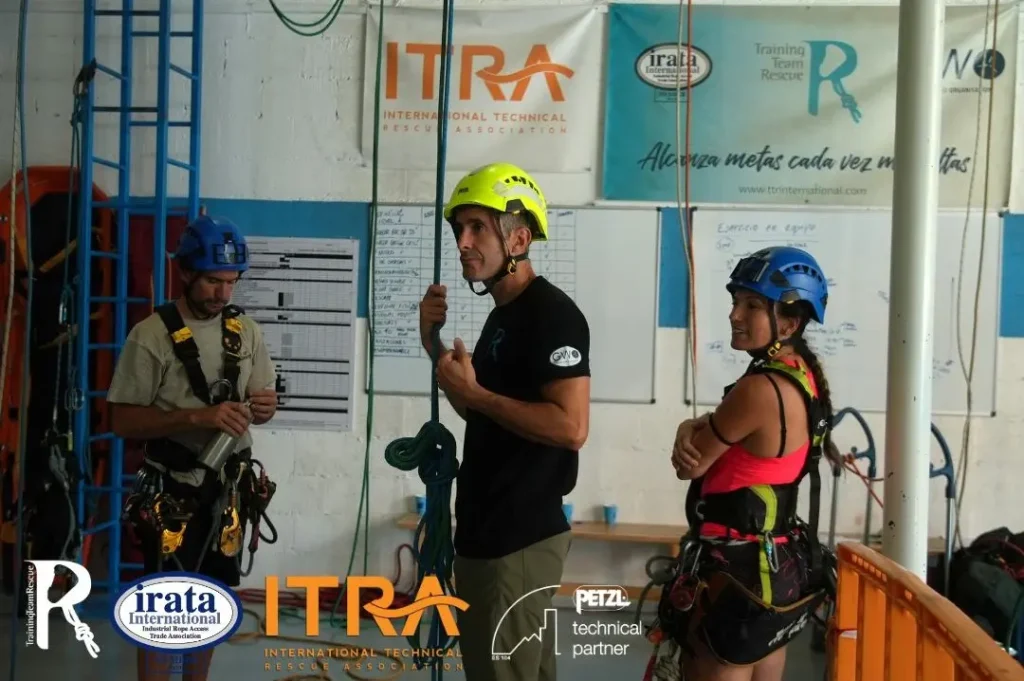
| Training Team Rescue – TTR | L’Hospitalet / Barcelona, Spain | €1,190* | 5 days + assessment | Barcelona BCN | Excellent | Urban / Fira Barcelona | €150/week – TTR |
| Heightworks | Wolverhampton, | £840 ≈ €980 | 5 days + assessment | Birmingham BHX | Very good | Urban | External |
| RAMP UK | Middlesbrough, UK | £749 ≈ €873 | IRATA week | Newcastle / Teesside | Medium | Business park | External |
| Singing Rock Polygon | Kladno, Czechia | CZK 24,500 + VAT | 47 h / 6 days | Prague PRG | Very good | Urban outskirts | External |
| KONG Training Center | Monte Marenzo, Italy | €980 | 4 days + assessment | Bergamo / Milan | Good | Small town | External |
| IQTC | Riga, Latvia | €1,249 VAT incl. | 4 days + assessment | Riga RIX | Excellent | Urban | External |
| ERATC | Pärnumaa, Estonia | €1,380 + VAT | 4 days + assessment | Tallinn TLL | Low-medium to venue | Rural | Included + meals |
| Gravitat | Montcada i Reixac / Barcelona | €1,190 | 5 days + assessment | Barcelona BCN | Medium | Industrial estate | External |
| Access Techniques | Sheffield, UK | Check dates | 4 days + assessment | Manchester MAN | Good | Urban | External |
* TTR: €1,190 is used here for the international-student profile where invoicing without Spanish VAT is applicable. Tax treatment must always be confirmed for the individual booking.
The published prices and course formats show meaningful differences. TTR currently publishes €1,190 with five full training days plus a separate independent assessment day, including equipment, materials and assessment fees. Heightworks advertises £840 and states that assessment takes place on day six, with a maximum 1:6 instructor-to-student ratio.
RAMP stands out on headline price, with Level 1 dates advertised at £749. Singing Rock publishes 47 hours across six days, including assessment, for CZK 24,500 plus VAT. KONG advertises €980 VAT-exempt with four training days and assessment on day five, while IQTC Riga lists €1,249 VAT included with four training days plus assessment.
The cheapest IRATA course is not always the cheapest trip
Imagine two courses:
| Headline price comparison Centre A: €900 Centre B: €1,190 |
At first glance the cheaper option seems obvious. Now add six nights of accommodation, airport transfers, daily commuting, possible taxis, meals and perhaps an extra night because of flight times. The difference can disappear completely.
For an international student, the more useful calculation is:
| Real IRATA trip cost Course + flight + accommodation + airport transfer + daily transport + meals |
This is why a training centre with a slightly higher course fee can be more competitive overall if it is close to a major airport, offers affordable accommodation and eliminates the need for a car or long daily journeys.
How many days should IRATA Level 1 training take?
IRATA Level 1 is aimed at people entering industrial rope access and does not require previous IRATA experience. During training, candidates need time to become familiar with equipment, safety systems, ascents, descents, rope-to-rope transfers, re-belays, deviations, structural progression and basic rescues.
That is why the amount of supervised practice before assessment matters.
- TTR Barcelona: 5 full training days + 1 independent assessment day
- Heightworks: 5 course days + independent assessment on day 6
- Singing Rock: 47 hours / 6 days including assessment
- KONG: 4 training days + assessment on day 5
- IQTC Riga: 4 training days + 1 assessment day
A four-day training format is not automatically insufficient. The point is that students should know exactly how much training time they are buying and how much time they will have to practise before being assessed.
Airport access matters more than it first appears
For an international student, a major airport can make a significant difference to both cost and convenience. Barcelona, Amsterdam, Milan, Prague, Birmingham and other major airports offer extensive international routes, while some training venues require regional airports or several additional hours of ground transport.
But comparing airports is still not enough. Two training centres can use exactly the same international airport and offer a very different travel experience. Barcelona is a good example.
Barcelona: the same airport, two very different training locations
TTR and Gravitat both provide IRATA training in the Barcelona metropolitan area and both use Barcelona-El Prat (BCN) as the main international airport. Their physical locations, however, create very different logistics for a student arriving from abroad.
TTR: training within Barcelona’s continuous urban area
Training Team Rescue is located in L’Hospitalet de Llobregat, next to Fira Gran Via and Plaça Europa. The area is fully integrated into Barcelona’s urban transport and service network.
- Metro
- FGC railway services
- buses
- hotels
- restaurants
- supermarkets
- shopping centres
- direct airport connection
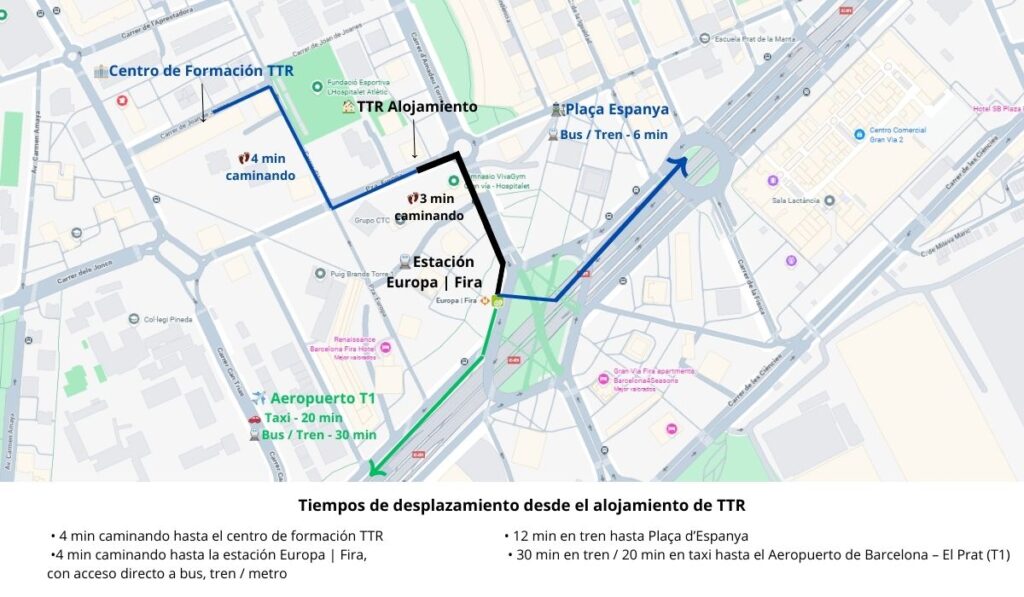
Barcelona Metro L9 Sud links airport terminals T1 and T2 with Europa | Fira and Fira. TMB states that trains run about every seven minutes and the airport-to-city journey on L9 Sud takes roughly 30-32 minutes. Official TMB airport metro information
For students using TTR accommodation, TTR currently publishes approximately 4 minutes on foot to the training centre, 4 minutes to Europa | Fira station, around 30 minutes to Barcelona-El Prat Airport and 16 minutes to Plaça d’Espanya from the accommodation.
View TTR student accommodation in Barcelona
Europa | Fira also has direct FGC services to Plaça Espanya, making it easy to connect with the rest of Barcelona without hiring a car.
Gravitat: Montcada i Reixac
Gravitat also markets IRATA training in the Barcelona area, but its physical training venue is in Carrer del Mig 32, Montcada i Reixac. The site is located in the Pla d’en Coll industrial estate, outside Barcelona city.
There is an R2 Nord rail connection from Barcelona Airport T2 to Montcada i Reixac, but the station on that line is not next to the training venue. A student must still complete the final part of the journey to Carrer del Mig.
This is a useful example of why an international student should compare airport-to-training-centre door time rather than simply airport-to-city or airport-to-municipality time.
An urban location changes the whole training-week experience
IRATA courses are physically demanding. After spending the day practising rope manoeuvres, most students would rather not add another long commute to get back to their accommodation.
A well-connected urban location means finishing training and immediately having access to restaurants, supermarkets, gyms, shops, public transport, leisure and the city itself.
At TTR, a student using the TTR accommodation can walk back after training and then use Europa | Fira to reach Plaça Espanya and other parts of Barcelona easily. This means that travelling to TTR is not simply travelling to Barcelona for a course: it is possible to train during the day and still experience the city after class, without depending on a car.
Barcelona food and dining: another advantage for international students
Barcelona is also an attractive training destination because of its food scene. After an intensive day of rope access training, students can choose between quick, practical meals close to Fira Barcelona or head into the city for Catalan, Mediterranean and international cuisine.
Around Plaça Europa, Gran Via and the nearby shopping areas you can find restaurants, cafés, supermarkets and takeaway options, which is useful when you simply want to eat close to the accommodation.
If you want to explore local food, areas such as Eixample, Sant Antoni, Poble-sec, the Gothic Quarter, El Born and Barceloneta are easy to reach by public transport.
- tapas and pintxos
- pa amb tomàquet
- escalivada
- calçots in season
- esqueixada
- fideuà
- Mediterranean rice dishes
- Catalan cured meats and cheeses
- crema catalana
The city also has a wide range of vegetarian, vegan and international restaurants. Markets such as La Boqueria, Santa Caterina and Sant Antoni are useful both for discovering local products and for buying ingredients if you prefer to prepare meals during your stay.
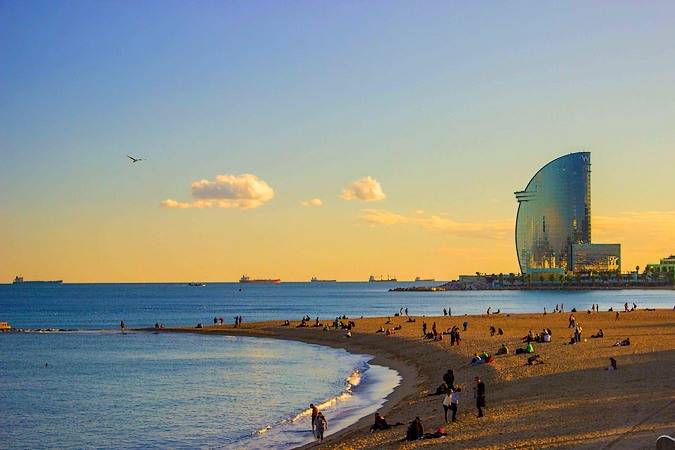
Barcelona beaches: switch off after training
Another benefit of choosing Barcelona is the possibility of combining professional training with time by the sea. Barcelona’s urban beaches are connected by metro and bus, so a car is not necessary.
- Barceloneta
- Sant Miquel
- Sant Sebastià
- Bogatell
- Mar Bella
- the Fòrum seafront area
Depending on the beach and route, students can travel from the TTR/Fira area towards Plaça Espanya and the city centre before continuing to the coast. The beach can be a good option for a walk, a relaxed dinner, light exercise or simply switching off before assessment.
Season matters: summer beaches are busy, while spring and autumn are often more relaxed. Even in winter, Barcelona’s seafront remains a good place to walk and enjoy the city outside training hours.
IRATA training in Barcelona for climbers
Many people entering IRATA come from climbing, mountaineering or other vertical sports. Barcelona is particularly attractive for this profile because several major climbing gyms are close to the TTR area.
Climbat La Foixarda
Climbat La Foixarda is located in Montjuïc and has more than 2,000 m² dedicated to climbing. It is only a few kilometres from TTR and is roughly a 10-minute drive depending on traffic. Its weekday opening hours make it possible to climb after the course.
Sharma Climbing Gavà
Sharma Climbing Gavà, at Carrer Girona 25 in Gavà, offers routes, bouldering, a training area, gym, yoga, bar and shop. From TTR it is approximately 15-20 minutes by car depending on traffic, and Gavà is also served by R2/R2 Sud rail services.
| For climbers travelling for IRATA Train IRATA during the day, climb in Barcelona after class. |
Accommodation: one of the hidden costs of IRATA training
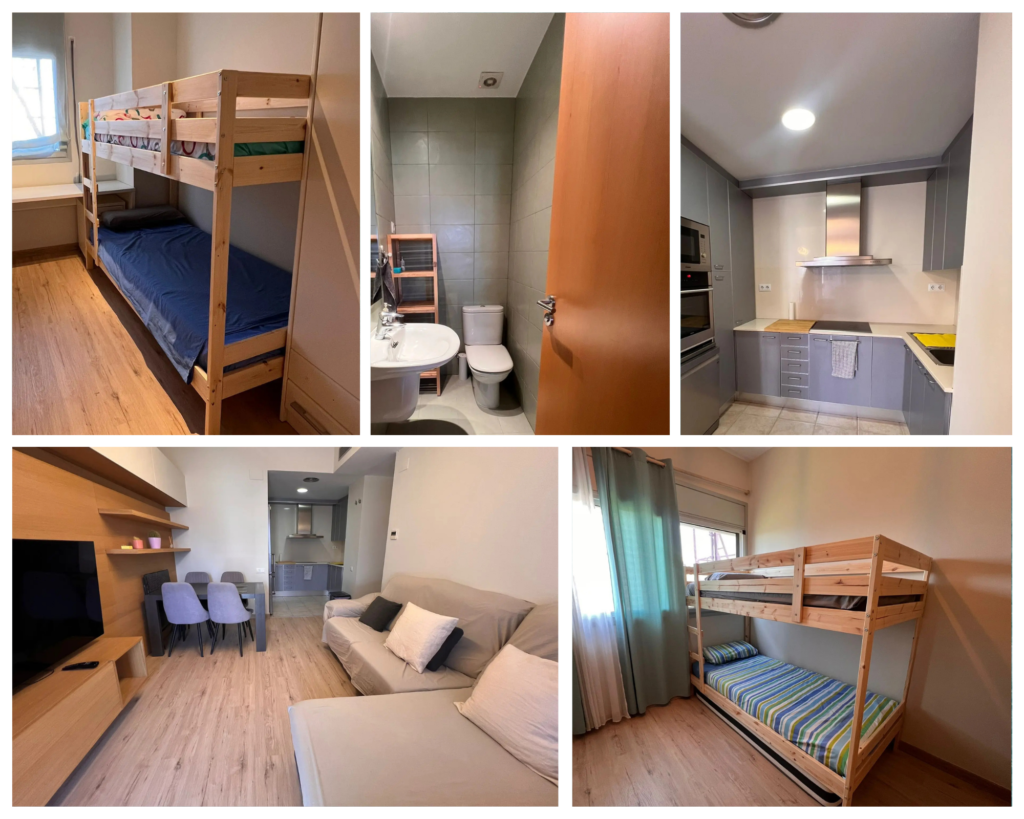
Barcelona is not a cheap city for hotels, which is precisely why a dedicated student option has such a large impact on the overall cost of the trip.
TTR offers its own student accommodation for €150 per week, subject to availability. It is located approximately four minutes on foot from both the training centre and Europa | Fira station and is intended specifically for national and international students attending intensive training.
| Basic TTR cost for an international student* IRATA Level 1 training: €1,190 TTR student accommodation: €150 Training + accommodation: €1,340 |
* Where invoicing without Spanish VAT is applicable to the student’s circumstances. Confirm tax treatment before booking.
The remaining costs are primarily the flight, food, personal spending and optional leisure. There is no need to add six hotel nights or hire a vehicle for the daily training commute.
Other interesting accommodation models
TTR is not the only centre that recognises accommodation as an important part of international training. ERATC in Estonia includes training, equipment, breakfast, lunch, dinner and accommodation in its package. The trade-off is location: the venue is in Pärnumaa rather than central Tallinn, which makes the ground journey from the international airport significantly longer.
This again demonstrates why course price, accommodation, venue location and airport access need to be evaluated together.
What is the cheapest IRATA course in Europe?
Among the public prices reviewed, RAMP UK appears as one of the lowest-priced options, with Level 1 dates advertised at £749. KONG is also highly competitive at €980 VAT-exempt, while Heightworks advertises £840 with assessment on day six.
However, for someone travelling internationally, the more useful question is:
| Which IRATA trip is actually the cheapest? The answer can be different once flights, accommodation, airport transfers and daily commuting are included. |
What is the best IRATA training centre in Europe?
There is no official IRATA ranking that identifies a single “best” training centre. Different students also have different priorities.
If your priority is the lowest headline course price
RAMP UK is particularly competitive.
If you want five full training days before assessment
TTR and Heightworks stand out with six-day schedules and a separate assessment day.
If you value training linked to a major equipment manufacturer
KONG and Singing Rock are interesting options.
If airport access and an urban location matter most
Barcelona and Riga are particularly convenient.
If you want accommodation included in a package
ERATC offers accommodation and meals, although the venue is far from Tallinn airport.
If you want training + affordable accommodation + easy international travel
TTR Barcelona offers a particularly strong combination.
| TTR Barcelona at a glance Training: €1,190 for the applicable international profile Accommodation: €150/week Format: 5 full training days + 1 independent assessment day Airport: Barcelona-El Prat (BCN) Location: Urban Barcelona metropolitan area / Fira Gran Via Daily commute from TTR accommodation: about 4 minutes on foot Languages: English and Spanish |
Why Barcelona is a particularly convenient destination for IRATA training
For a student arriving from abroad, Barcelona combines several factors that are difficult to find together.
Major international airport
Barcelona-El Prat serves the main European markets and many international destinations. L9 Sud connects both airport terminals with the Fira Barcelona area.
No car required
You can arrive by public transport and move around throughout the week without renting a vehicle.
Accommodation next to training center
TTR offers dedicated student accommodation approximately four minutes on foot from the training centre.
Fast access to Barcelona
Europa | Fira has direct rail and metro connections into Barcelona, including Plaça Espanya.
Mediterranean and international food
Restaurants, markets, Catalan cuisine and international options make it easy to eat well throughout the week.
Beach and seafront
Barcelona’s urban beaches are reachable by public transport and give students an easy way to relax outside training hours.
Climbing and sport
La Foixarda, Sharma Gavà, gyms and other sports facilities are close enough to use during the training week.
A destination worth staying in
Culture, restaurants, beach, climbing and public transport mean the trip can offer more than the qualification alone.
IRATA training in Barcelona with Training Team Rescue
Training Team Rescue provides IRATA Level 1, Level 2 and Level 3 training in Barcelona. IRATA International lists Training Team Rescue as member 5041/OT, Full Trainer and Full Operator, with Mikel Gómez as Technical Authority.
View TTR on the official IRATA International member directory
IRATA Level 1 duration
5 full days of intensive training + 1 day of assessment with an independent IRATA assessor.
Price
€1,190 + VAT where applicable. For eligible international bookings, the relevant tax treatment should be confirmed before invoicing.
Included
- approved training equipment and materials
- assessment fees
- certification issuance
- shipping of the official documentation
Students can also request TTR accommodation in Barcelona for €150 per week, subject to availability. Training is available in English and Spanish, making the Barcelona venue suitable for students travelling from different countries.
View upcoming IRATA dates and book online
Before booking your IRATA course in Europe
- Confirm that the company currently appears as an IRATA Training Member.
- Check the exact physical address where your training will take place.
- Confirm how many real training days you will receive.
- Check which day the independent assessment takes place.
- Confirm that assessment fees are included in the price.
- Check whether technical equipment is included.
- Confirm the language of the specific course dates.
- Identify the airport you will actually use.
- Calculate the real airport-to-training-centre travel time.
- Choose your accommodation before buying a non-refundable flight.
- Calculate the daily accommodation-to-training commute.
- Check restaurants and supermarkets near the training venue.
- Consider climbing, beaches or other activities if these matter to your trip.
- Calculate the complete cost of the week, not just the course fee.
A €200 difference in the initial course price may become insignificant once the entire week is calculated.
Frequently asked questions about IRATA training in Europe
How much does IRATA Level 1 cost in Europe?
In the centres reviewed here, published Level 1 prices range roughly from €850-€900 to above €1,500, depending on the country, tax treatment and services included. International students should also budget for accommodation and transport.
How many days does IRATA Level 1 take?
It depends on how each Training Member schedules the course. The examples reviewed include 4 training days + assessment and 5 full training days + an independent assessment on day six.
Do I need previous experience for IRATA Level 1?
No. Level 1 is the entry level in the IRATA system and is designed for people starting in industrial rope access.
Can I take IRATA training in English in Spain?
Yes. Some Spanish IRATA Training Members provide courses in English for international students. TTR Barcelona delivers training in both English and Spanish.
Where can I take IRATA training with accommodation?
Some centres provide accommodation or packaged options. TTR Barcelona offers dedicated student accommodation for €150 per week, subject to availability. ERATC also includes accommodation and meals in its package.
What is the best airport for an IRATA course in Europe?
It depends on the exact training venue. Major airports such as Barcelona BCN, Riga RIX, Prague PRG and Birmingham BHX can be convenient, but always calculate the complete airport-to-training-centre journey rather than airport-to-city time.
Is Barcelona a good city for IRATA training?
Yes, particularly for international students. It combines a major airport, extensive public transport, an urban training location, accommodation options and easy access to restaurants, climbing, beaches and the rest of the city.
Can I go to the beach during an IRATA course in Barcelona?
Yes. Barcelona’s urban beaches are connected to the Fira Barcelona area by public transport and can be visited after training or before and after the course.
What food can I find in Barcelona?
Barcelona offers Catalan and Mediterranean cuisine, tapas, rice dishes, markets, international restaurants and many vegetarian and vegan options.
Where can I climb after IRATA training in Barcelona?
Climbat La Foixarda in Montjuïc and Sharma Climbing Gavà are two strong options. Both can be reached relatively quickly from the TTR area.
What is the cheapest country for IRATA training in Europe?
There is no single answer because public prices vary by centre and tax treatment. The UK, Italy and parts of Central/Eastern Europe can offer competitive course fees, but the cheapest course is not necessarily the cheapest overall trip.
Where can I take an IRATA course in English in Europe?
English-language training is widely available at many European Training Members. Always confirm the language for the exact dates you want to book. TTR Barcelona offers training in English and Spanish.
Conclusion: compare the whole trip, not just the course
Europe has many excellent places to obtain an IRATA qualification, and there is no single option that is right for every student. Someone living close to Middlesbrough may find RAMP extremely attractive. A Central European student may prefer Singing Rock. Riga can offer a strong combination of city, airport and course logistics.
But when you need to get on a plane specifically to take the course, the equation changes. You should compare course price, training days, flights, airport, accommodation, daily travel, meals and the experience of the destination.
In that scenario, Barcelona offers a particularly attractive combination for international students.
| Plan your IRATA week around one location at TTR Barcelona IRATA Level 1: €1,190 Training: 5 full training days + independent assessment TTR accommodation: €150/week Accommodation → training: about 4 minutes on foot Airport: Barcelona-El Prat connected by metro Barcelona: easy access by public transport Languages: English and Spanish After training: restaurants, Mediterranean food, beach, climbing and city life |
If you are a climber, you can finish the training day and continue climbing at some of Barcelona’s major climbing gyms. Or you can have dinner in the city, walk along the seafront or simply return to accommodation a few minutes from the training centre.
Travel to Barcelona. Train to the IRATA standard. Make the most of your training week.
