


Conclusions from the IRATA Workshops 2024–2025: What Is Changing in Training and Real-World Rope Access Work
Introduction
Each year, the technical workshops and meetings organised by IRATA International bring together trainers, assessors, supervisors and member companies with a very specific objective: to analyse how the IRATA system is being applied in real working conditions, beyond the controlled environment of courses and assessments.
These workshops are not intended to reinterpret the standard “on paper”. Instead, they focus on identifying recurring issues in the field, sharing experiences between professionals from different countries, and assessing whether procedures, training and supervision are performing as they should in real working situations. Through these technical discussions, trends, common deviations and areas of the IRATA system that require reinforcement are identified—whether through changes in training, greater emphasis on certain competencies, or adjustments to how competence is assessed.
The conclusions drawn from these meetings are particularly relevant because they reflect the operational reality of the industry, not just theory. They provide a key reference for understanding where IRATA is heading and which aspects are receiving increased attention in terms of safety, competence and good practice.
In this article, we compile all the key conclusions from the IRATA Workshops 2024–2025, summarised and structured into thematic blocks, and interpret them through TTR’s direct experience in IRATA training, supervision and real rope access operations.
Quick summary: key conclusions from the IRATA Workshops 2024–2025
-
Passing a course does not guarantee real competence.
-
Procedures must be understood, not memorised.
-
Level 3 supervision requires leadership and sound judgement.
-
A system is only as safe as its complete configuration.
-
Rescue remains the weakest point.
-
Safety culture must take priority over productivity.
Block 1. IRATA training: passing does not always mean being competent
One of the most frequently repeated conclusions in the workshops is the growing gap between passing an IRATA level and demonstrating solid competence in real work situations.
What has been identified
-
Technicians who pass the assessment but fail to consolidate basic fundamentals.
-
Excessive reliance on memorised sequences.
-
Difficulties applying techniques outside the controlled training environment.
-
Lack of technical judgement in non-standard situations.
Why this is a problem
IRATA is not designed to produce “automatic operators”, but technicians capable of assessing risks and making safe decisions. When training is focused solely on passing the assessment, the core objective of the system is lost.
What this conclusion implies
-
Higher demands during both pre-training and the course itself.
-
The need to practise varied, non-exam-style scenarios.
-
The importance of real work experience between levels, not just accumulating hours.
Block 2. IRATA procedures: mechanical use vs conscious application
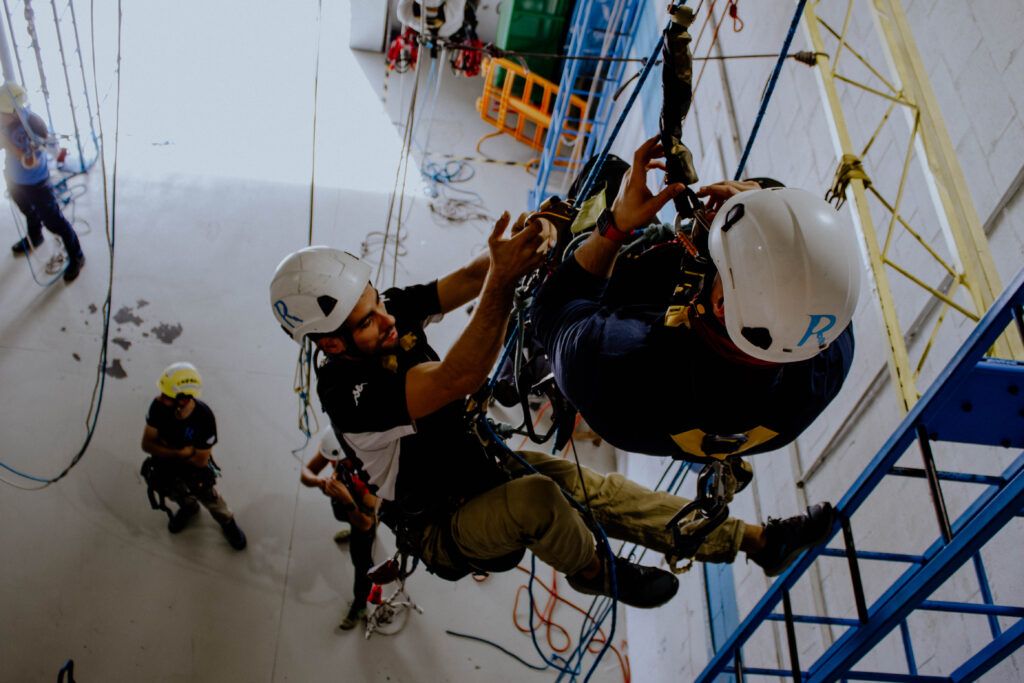
Another major concern is the mechanical application of procedures without a real understanding of their purpose.
What has been identified
-
Technicians following procedures step by step without understanding the “why”.
-
Difficulty adapting methods when conditions change.
-
Errors when facing new or unexpected situations.
IRATA’s implicit message
IRATA procedures are a safety tool, not a rigid script. The system requires:
-
Prior analysis.
-
Continuous risk assessment.
-
The ability to adapt without compromising safety.
What should change
-
Greater emphasis on technical reasoning during training.
-
Assessing decisions, not just manoeuvres.
-
Reinforcing the principle of “think before you act”.
Block 3. IRATA Level 3 supervision: leadership under pressure
The workshops have placed particular focus on the role of the IRATA Level 3 Supervisor, especially in demanding environments.
What has been identified
-
Supervisors who are technically competent but lack leadership and management skills.
-
Difficulty stopping unsafe work under productivity pressure.
-
Communication problems within teams.
-
Lack of effective authority regarding safety matters.
Why this is critical
A Level 3 is not simply the “most experienced technician”. They are:
-
Responsible for the safe system of work.
-
The person who validates methods, equipment and rescue plans.
-
The one who must make unpopular decisions when safety demands it.
Key conclusion
IRATA supervision requires judgement, leadership and real experience, not just technical proficiency.
Block 4. Equipment: compatibility, limits and real system use
Using certified equipment does not guarantee safety if the entire system is not properly understood.
What has been identified
-
Technically incorrect configurations using approved equipment.
-
Lack of understanding of real system limits (angles, loads, friction).
-
Incompatibility between devices.
-
Inspections treated as a formality rather than a critical control.
What IRATA is highlighting
-
A system is only as safe as its weakest component.
-
Equipment compatibility is essential.
-
Inspection and traceability are integral parts of the system, not add-ons.
Practical implications
-
Continuous training in equipment selection and use, as well as training in PPE inspection and examination, to identify incompatibilities, wear and configuration errors before they become real risks.
-
Genuine technical advice, not just equipment sales.
-
Integrating inspection, use and maintenance as a single system.
Block 5. Rescue: the critical point that continues to fail
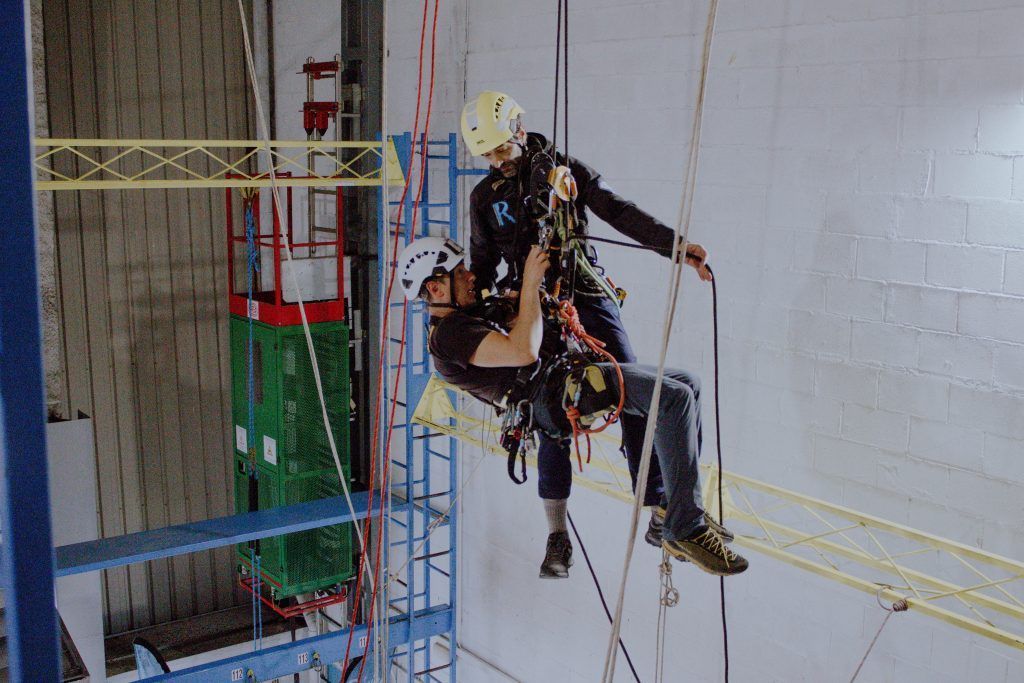
Rescue once again emerges as one of the weakest points of the system in real-world application.
What has been identified
-
Unrealistic rescue plans.
-
Technicians who know isolated manoeuvres but not complete rescues.
-
Lack of consideration of the real environment in which an incident would occur.
-
Difficulty performing rescues under stress and pressure.
The clear message
Knowing how to rescue is not:
-
Knowing a single manoeuvre.
-
Repeating a training exercise.
It is being able to carry out a real rescue in that specific environment, with the available resources and under pressure.
What this conclusion implies
-
Training realistic rescue scenarios.
-
Integrating rescue planning from the very beginning of the job.
-
Accepting that if a viable rescue is not possible, the work should not start.
Block 6. Safety culture: productivity vs safety
A recurring theme across all workshops is the constant tension between productivity and safety.
What has been identified
-
Normalisation of risk in repetitive tasks.
-
Pressure to complete work “because it’s always been done that way”.
-
Difficulty stopping unsafe work.
-
Poor communication between technicians, supervisors and companies.
What IRATA reinforces
-
Safety is not negotiable.
-
Stopping unsafe work is a professional decision.
-
Safety culture must be actively supported by the company.
What all these conclusions tell us together
When all the blocks are considered together, the message is clear:
-
IRATA reinforces real competence, not simply passing assessments.
-
Decision-making is as important as technical skill.
-
Level 3s must lead, not just execute.
-
Rescue remains the most critical weakness.
-
Safety must prevail over operational pressure.
How TTR interprets these conclusions
At TTR, we see these conclusions as a clear call for:
-
Demanding, realistic training
-
The use of scenarios that reflect real working conditions
-
Strengthening technical judgement and decision-making
-
Genuine integration of rescue, equipment and planning
Because safety in rope access work is not about complying with a standard—it is about applying it correctly every day in the field.
What can you do as a technician or company?
-
If you are a technician: review how you train and how you apply IRATA in your day-to-day work.
-
If you are a supervisor: strengthen your leadership role in safety.
-
If you are a company: ensure IRATA is applied as a system, not as a formality.
👉 At TTR, we support you through IRATA training, as well as technical consultancy and supervision, to ensure the system works in practice—not just on paper.
